Een schone auto houden is makkelijker als je niet telkens een snoer, verlengkabel of grote stofzuiger nodig hebt. Zoek je een cordless vacuum cleaner for car gebruik, dan draait de beste keuze vooral om zuigkracht, accuduur, hulpstukken en hoe prettig het apparaat in krappe hoeken werkt.
Wat maakt een draadloze stofzuiger goed voor autoreiniging
Een auto is lastiger schoon te maken dan een gewone vloer. Je werkt tussen stoelrails, deurvakken, matten, bekerhouders, gordelpunten en smalle naden waar vuil zich snel ophoopt.
Een goede draadloze autostofzuiger hoeft niet de grootste te zijn. Hij moet vooral genoeg kracht hebben voor vastzittend vuil, lang genoeg meegaan voor jouw voertuig en hulpstukken hebben waarmee je ook echt bij de kleine plekken komt.
Sterke zuigkracht helpt bij zand, kruimels en vuil
In een auto ligt vaak zwaarder vuil dan je denkt: zand van schoenen, kruimels van snacks, droge modder, steentjes of bladeren. Een zwakke stofzuiger pakt dan alleen het zichtbare laagje mee, terwijl veel vuil in de matten en stof blijft zitten.
Let daarom niet alleen op woorden als “krachtig” of “high power”, maar ook op hoe de stofzuiger presteert op bekleding en automatten. Een booststand kan handig zijn voor zand of hardnekkige kruimels, al loopt de accu dan meestal sneller leeg.
Accuduur telt zwaarder bij grotere voertuigen
Voor een kleine auto en snelle kruimels is een korte gebruiksduur vaak genoeg. Bij een SUV, bestelauto, minivan of gezinsauto met kofferbak wordt accuduur veel belangrijker.
- Voor kleine schoonmaakbeurten is 10 tot 15 minuten echte gebruiksduur vaak voldoende.
- Voor een volledige schoonmaakbeurt is 20 tot 30 minuten praktischer.
- Gebruik je vaak de hoogste stand, kijk dan niet alleen naar de maximale accuduur op de laagste stand.
Kleine hulpstukken maken krappe plekken makkelijker schoon
In een auto maken hulpstukken vaak het verschil tussen “even snel gezogen” en echt schoon. Een smalle kierenzuiger komt tussen stoel en middenconsole, terwijl een borstelmond vuil uit stof en matten losmaakt.
Een flexibele slang of buigbare zuigmond is vooral handig als de stofzuiger zelf wat groter is. Je hoeft het apparaat dan minder ver in rare hoeken te duwen, wat prettiger werkt rond pedalen, onder stoelen en in de kofferbak.
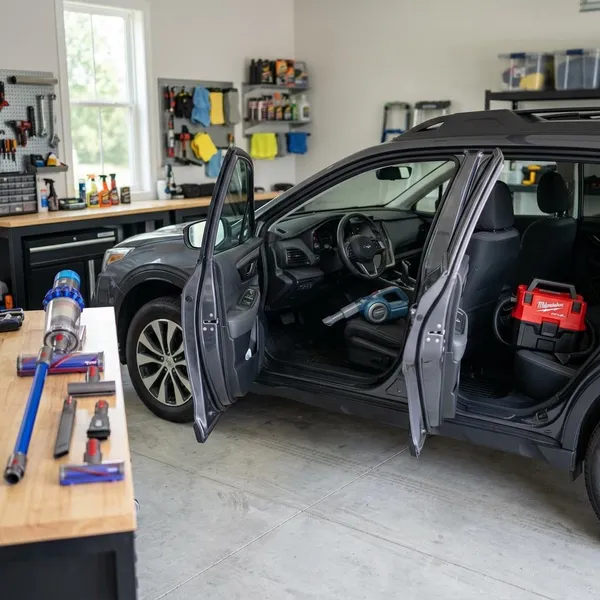
Welk type draadloze stofzuiger past bij jouw gebruik
Niet iedereen heeft dezelfde autostofzuiger nodig. Iemand die alleen af en toe kruimels opzuigt, stelt andere eisen dan iemand met kinderen, huisdieren, sportspullen of veel zand in de auto.
Compacte modellen zijn het beste voor snelle schoonmaakbeurten
Een compact model is ideaal als gemak vooropstaat. Je pakt hem snel, hij ligt niet in de weg en hij is meestal licht genoeg om met één hand te gebruiken.
Daar staat tegenover dat kleine modellen vaak een kleinere stofbak, kortere accuduur en minder zuigkracht hebben. Voor onderhoud tussendoor is dat prima, maar voor een grondige beurt na vakantie, strand of modderige schoenen kan het tegenvallen.
Krachtigere handstofzuigers passen bij grondiger reinigen
Een krachtigere handstofzuiger is logischer als je de hele auto in één keer wilt doen. Deze modellen hebben meestal meer zuigkracht, een grotere opvangbak en soms betere filters.
| Gebruikssituatie | Handige keuze |
|---|---|
| Af en toe kruimels of stof | Licht compact model |
| Gezinsauto met matten en kofferbak | Krachtige handstofzuiger met langere accuduur |
| Veel zand, modder of sportspullen | Model met booststand en grotere stofbak |
Kies niet alleen op vermogen. Als het apparaat te zwaar of onhandig is, laat je sneller plekken overslaan.
Huisdiereigenaren hebben betere tools nodig voor haar en bekleding
Haren van honden en katten gedragen zich anders dan gewoon stof. Ze blijven hangen in stoffen stoelen, vloerbedekking en kofferbakbekleding. Een gewone zuigmond krijgt dat vaak maar half los.
Voor huisdieren zijn een rubberen borstel, mini-turboborstel of motorisch aangedreven borstel nuttig. Ook een makkelijk schoon te maken filter is belangrijk, omdat haren, stof en huidschilfers de luchtstroom sneller kunnen verminderen.
Waar je op moet letten voordat je koopt
Specificaties op een productpagina zeggen niet alles. Een draadloze stofzuiger kan krachtig lijken, maar alsnog tegenvallen als hij zwaar in de hand ligt, traag oplaadt of een te kleine stofbak heeft.
Gewicht en grip beïnvloeden comfort in krappe ruimtes
Autoreiniging betekent vaak buigen, reiken en draaien. Je hangt over de achterbank, werkt tussen stoelen of probeert onder de voorstoelen te komen. Dan merk je snel of een stofzuiger goed in balans is.
- Een lager gewicht helpt bij langere schoonmaakbeurten.
- Een stevige grip geeft meer controle bij smalle naden.
- Een te brede behuizing kan lastig zijn rond stoelrails en pedalen.
De grootte van de stofbak bepaalt hoe vaak je moet legen
Een kleine stofbak is geen probleem voor wat kruimels, maar bij zand, bladeren, dierenhaar of een volle gezinsauto zit hij snel vol. Zodra de bak te vol raakt, kan de zuigkracht merkbaar afnemen.
Voor een grotere auto is een iets ruimere opvangbak prettiger. Voor een compact model dat je vooral tussendoor gebruikt, mag de bak kleiner zijn zolang hij makkelijk te legen is.
Oplaadtijd is belangrijk als je vaak schoonmaakt
Een lange oplaadtijd kan irritant zijn als je de stofzuiger regelmatig nodig hebt. Vooral bij gezinnen of huisdieren wil je hem kunnen pakken zonder eerst uren te wachten.
Let op drie dingen: hoe lang volledig opladen duurt, of er een duidelijke batterij-indicator is en hoe lang het apparaat meegaat op de stand die jij echt gebruikt. Een verwisselbare accu kan handig zijn, maar is niet voor iedereen nodig.
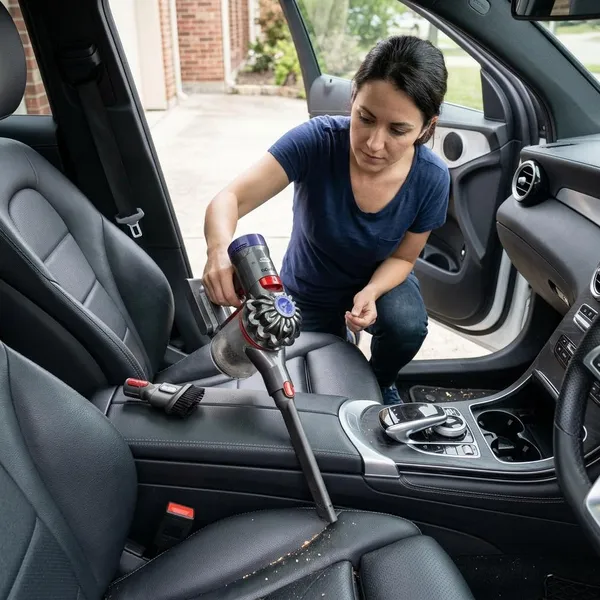
Welke functies zijn het nuttigst in een auto
Sommige extra functies klinken indrukwekkend, maar voegen weinig toe in een auto. De nuttigste onderdelen zijn meestal heel praktisch: beter bereik, meer precisie en hulp bij stof of haren in bekleding.
Een kierenzuiger helpt bij stoelen en deurvakken
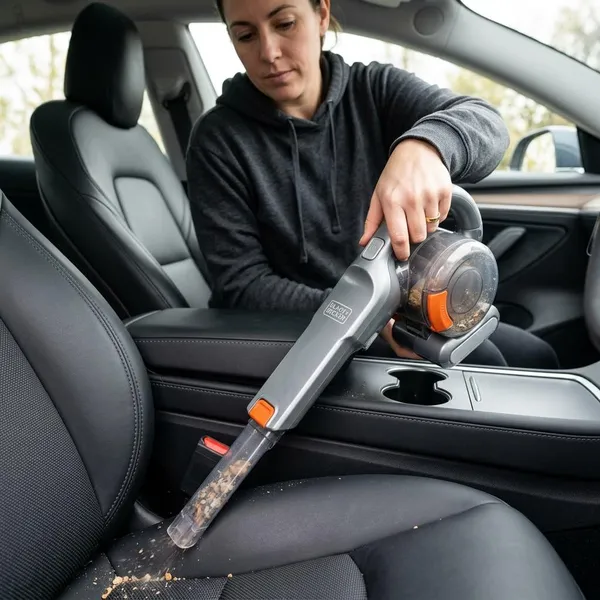
De kierenzuiger is waarschijnlijk het meest gebruikte hulpstuk in een auto. Hij past tussen de stoel en middenconsole, langs stoelrails, in deurvakken en rond gordelsluitingen.
Door de smalle vorm wordt de zuigkracht geconcentreerd op één plek. Dat werkt beter dan een brede mond die vuil vooral verplaatst of net niet in de hoek komt.
Een borstelmond werkt beter op stof en matten
Stoffen bekleding en automatten houden vuil vast. Een borstelmond maakt kruimels, stof, haren en fijn zand los voordat de stofzuiger het opzuigt.
Gebruik de borstel vooral op:
- stoffen stoelen;
- vloer- en kofferbakmatten;
- beklede zijpanelen in de bagageruimte;
- plekken waar lint, stof of haren blijven kleven.
Een slang of flexibele zuigmond verbetert het bereik
Een slang of flexibele zuigmond is handig als je onder stoelen, rond pedalen of diep in de kofferbak wilt komen. Je houdt de stofzuiger dan stabiel vast terwijl alleen het uiteinde beweegt.
Voor grotere auto's met meerdere zitrijen kan dit veel gedoe schelen. Je hoeft minder vaak van houding te wisselen en komt makkelijker bij plekken waar een brede handstofzuiger blijft steken.
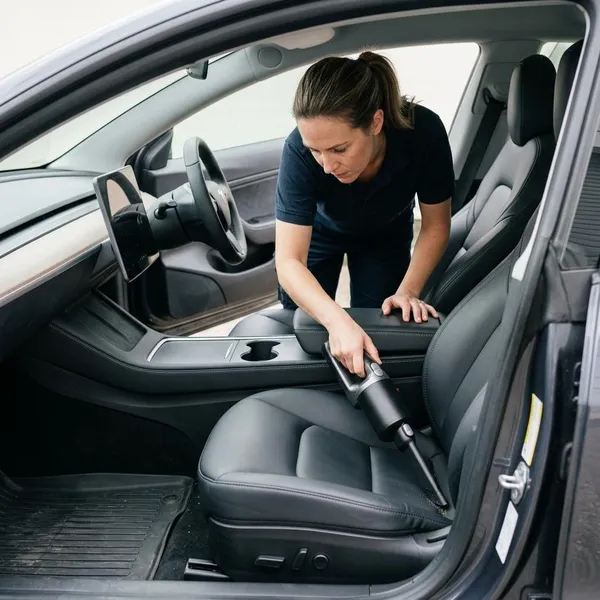
Hoe gebruik je een draadloze stofzuiger effectiever
Zelfs een goede autostofzuiger werkt beter met een vaste volgorde. Je bespaart accuduur, voorkomt dubbel werk en krijgt meer vuil uit naden en bekleding.
Begin met matten, stoelen en los vuil
Haal eerst de vloermatten uit de auto en klop ze buiten uit. Grote stukken vuil, papiertjes, speelgoed of verpakkingen kun je beter met de hand verwijderen voordat je gaat zuigen.
Daarna zijn de stoelen en open vloerdelen aan de beurt. Pas daarna heeft het zin om de kleine naden, stoelrails en deurvakken nauwkeurig te doen.
Werk van hogere oppervlakken naar de vloer
Stof en kruimels vallen tijdens het schoonmaken naar beneden. Begin daarom bij dashboardranden, deurpanelen, stoelen en armsteunen. Ga daarna naar de onderkant van de stoelen, de matten en de vloer.
Deze volgorde voorkomt dat je de vloer twee keer moet doen. Vooral in gezinsauto's, waar kruimels vaak uit stoelranden blijven vallen, scheelt dat tijd.
Stem het hulpstuk af op het oppervlak
Eén mondstuk voor de hele auto lijkt handig, maar geeft zelden het beste resultaat.
- Gebruik de kierenzuiger voor naden, deurvakken, stoelrails en de ruimte naast de middenconsole.
- Gebruik de borstelmond voor matten, stoffen stoelen en kofferbakbekleding.
- Gebruik een flexibele slang voor plekken onder stoelen, bij pedalen en in diepe hoeken.
- Gebruik de booststand alleen waar dat nodig is, zoals bij zand, haren of vuil dat in de vezels zit.
Hoe houd je de stofzuiger goed werkend
Een draadloze stofzuiger verliest vaak niet ineens kracht omdat hij versleten is, maar omdat de stofbak vol zit, het filter verstopt raakt of de accu steeds leeg wordt opgeborgen. Een paar simpele gewoontes houden het apparaat merkbaar beter bruikbaar.
Leeg de stofbak voordat de zuigkracht daalt
Wacht niet tot de stofbak helemaal vol zit. Bij haren, zand en fijn stof kan de luchtstroom al eerder verminderen.
Leeg de bak na een grotere schoonmaakbeurt meteen. Dat voorkomt ook muffe geurtjes en aangekoekt vuil in de opvangbak.
Maak het filter schoon om de luchtstroom sterk te houden
Het filter bepaalt voor een groot deel hoe goed de stofzuiger blijft zuigen. Fijn stof van automatten, zand, pluisjes en dierenharen kunnen het filter snel dichtzetten.
Heeft je model een wasbaar filter, laat het dan volledig drogen voordat je het terugplaatst. Een vochtig filter kan de luchtstroom verstoren en is niet goed voor het apparaat. Een extra filter is handig als je vaak schoonmaakt.
Bewaar hem opgeladen en klaar voor gebruik
Een draadloze stofzuiger is vooral nuttig als je hem direct kunt pakken. Een vaste plek in de garage, bijkeuken of kast bij de oplaadkabel werkt vaak beter dan hem ergens leeg wegleggen.
Laat hem liever niet langdurig in een erg hete of koude auto liggen. Extreme temperaturen kunnen de accu belasten. Opladen na gebruik maakt de kans groter dat hij klaarstaat wanneer er weer kruimels, zand of hondenhaar in de auto ligt.
Conclusie
De beste keuze is de draadloze stofzuiger die past bij jouw auto en schoonmaakritme. Voor snelle kruimels is een licht compact model vaak genoeg, terwijl zand, huisdieren en grotere voertuigen vragen om meer zuigkracht, betere hulpstukken en langere accuduur. Als het apparaat prettig in de hand ligt en makkelijk te onderhouden is, wordt de auto schoonhouden een stuk minder gedoe.